
To Al Baseer Foundation
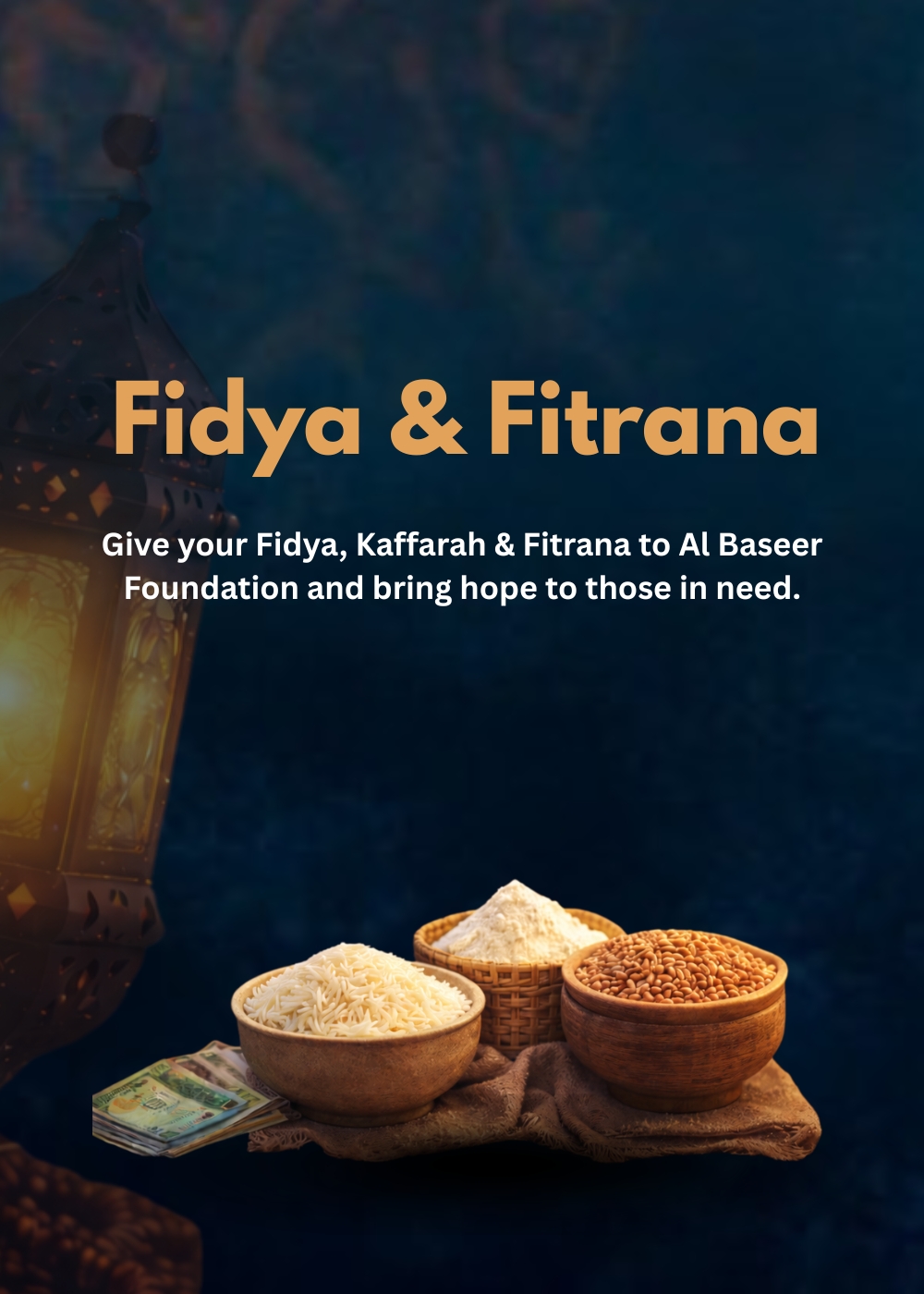
Fidya & Fitrana

How Your Fidya & Fitrana Support Those in Need?

By fulfilling your Fidya and Fitrana (Zakat al-Fitr), you can support vulnerable families during Ramadan by helping them access essential eye screenings, medicines, glasses, and sight-restoring surgeries. Your contribution helps patients who cannot afford treatment receive timely care with dignity, while also bringing lasting relief and hope to those suffering from avoidable blindness. Fitrana should be given before the Eid prayer, ensuring your support reaches deserving people at the most important time—so they can welcome Eid with ease, dignity, and renewed hope.
PAKISTAN Fidya (Per Person)

Fidya (Per Person)

PKR

Fidya is given by those who are unable to fast due to illness or old age. Your Fidya helps provide essential eye care and treatment for deserving patients during Ramadan.

Fidya Amount: PKR 500 per person, per missed fast.

Support eye care for deserving patients during Ramadan through Fidya — PKR 500 per person.

Donate Now
PAKISTAN Fitrana

Fitrana

PKR

Fitrana Rates (Per Person)

Give Fitrana to support eye care so families can welcome Eid with dignity.

Wheat (Gandum) – Rs 220
Barley (Jau) – Rs 450
Dates (Khajoor) – Rs 1650
Raisins (Kishmish) – Rs 2500
Ajwa Dates – Rs 14400

Donate Now

What is the Difference Between Zakat, Fitrana & Fidya?

All of these are charitable obligations in Islam, but they differ in purpose, timing, and who must pay. Understanding the difference helps ensure your donation is given correctly and reaches those who need it most.

Zakat

Zakat is an annual obligation on eligible wealth (usually 2.5%) held above the Nisab threshold for one lunar year. It purifies wealth and supports eligible recipients as defined by Shariah.

  • When: Once every lunar year
  • Who pays: Muslims whose wealth exceeds Nisab
  • Purpose: Purification of wealth & social justice

Fitrana (Zakat al-Fitr)

Fitrana is a fixed charity paid at the end of Ramadan so that everyone, including the poor, can celebrate Eid with dignity. It must be given before the Eid prayer.

  • When: End of Ramadan (before Eid Salah)
  • Who pays: Head of household for dependents
  • Purpose: Purification of fasting & Eid support

Fidya

Fidya is paid when a person cannot fast during Ramadan due to a valid long-term reason (such as chronic illness or old age) and cannot make up the missed fasts later.

  • When: During or after Ramadan
  • Who pays: Those unable to fast long-term
  • Purpose: Compensation for missed fasts

How Your Zakat, Fidya & Fitrana Change Lives

Your contributions through Zakat, Fidya and Fitrana help restore vision, provide eye treatments, screenings, medicines, and sight-restoring surgeries for those who cannot afford care. Watch how your support brings dignity, healing, and hope to vulnerable communities.

Fidya & Fitrana: Supporting Lives This Ramadan

During Ramadan, many people delay treatment because they cannot afford it. Through Al-Baseer Foundation (ABF), your Fidya and Fitrana can support eye screenings, medicines, glasses, and sight-restoring surgeries— ensuring deserving patients receive timely care with dignity and hope.

What is Fidya?

Fidya is paid when a person is unable to fast in Ramadan due to a valid reason (such as illness, old age, or a medical condition) and cannot make up missed fasts later. Your Fidya through ABF helps provide essential eye care support—including screenings, prescribed medicines, and glasses—for patients who cannot afford treatment.

What is Fitrana?

Fitrana (also known as Zakat al-Fitr) is paid at the end of Ramadan, before the Eid prayer. It ensures that families facing financial hardship can celebrate Eid with dignity. Through ABF, your Fitrana supports eye checkups, medicines, and life-changing surgeries—so patients welcome Eid with relief and renewed hope.

Why Give Your Fidya & Fitrana Through ABF?

Giving through Al-Baseer Foundation ensures your donations reach deserving patients at the right time. ABF works to reduce avoidable blindness by supporting eye screenings, medical treatment, and sight-restoring surgeries—especially during Ramadan.

What Has ABF Achieved So Far?

ABF continues to expand eye camps and treatment programs for underserved communities. With your support, more patients receive timely care—helping restore vision, dignity, and independence.

Frequently Asked Questions